ABOUT
Background
The very fact that we are looking for something usually stands in the way of our finding it.
An African Proverb
Medical informatics is the use of information technology, computer systems and communication tools to enhance and improve all aspect of patient care, medical education and medical research.
Modern science and medicine are information intensive. There are millions of articles and published materials that referenced each other and the numbers are growing very rapidly. Finding the best set of articles and one good pertinent article can be very challenging and time consuming and sometimes could be like finding a needle in the haystack.
There are a growing number of databases covering all kinds of biological information, from genome, nucleic acid and protein sequences to clinical researches and practice guidelines. But accessing useful data from these labyrinths is difficult and finding information on them can be time-consuming and unpredictable. Current search strategies for biomedical databases are not ideal and precise and they are not guarantee of retrieving the most relevant references available on specific subject. They are carrying out a text word search such as Mesh term in case of Medline PubMed database. They are also biased by subject experts reading each article and assigning specific terminology (Medical Subject Headings or MeSH) to describe the content of the article. Searching by textwords (or keywords), also is a search for the occurrence of the exact word(s) in the title or abstract, which does not guarantee that the word(s) are actually a topic of the article.
The Medline database is indexed by subject specialists who read each article completely and then assign terms to describe (as specifically as possible) the content of the article. The terms come from a standardized list of vocabulary and definitions called MeSH or Medical Subject Headings. The idea behind MeSH is that all articles about the same concept are assigned the same standardized subject heading.
For example, one author may use the words diabetes type 1, another may use insulin dependent diabetes, and a third author might use diabetes mellitus, sudden-onset. However all of the articles will be indexed under Diabetes Mellitus, Insulin-Dependent, the MeSH term for this disease.
Textwords searching, on the other hand, only looks for the exact word or phrase in the title or abstract. Using the textwords insulin dependent diabetes will only retrieve articles with that exact phrase in the title or abstract.
Description of the invention
Medantis with its innovative reference search technology enables database users in medical fields or other scientific fields, the most relevant results for any subject they seek. Medantis cornerstone algorithm determines the quality of an article by the articles that referenced to it.
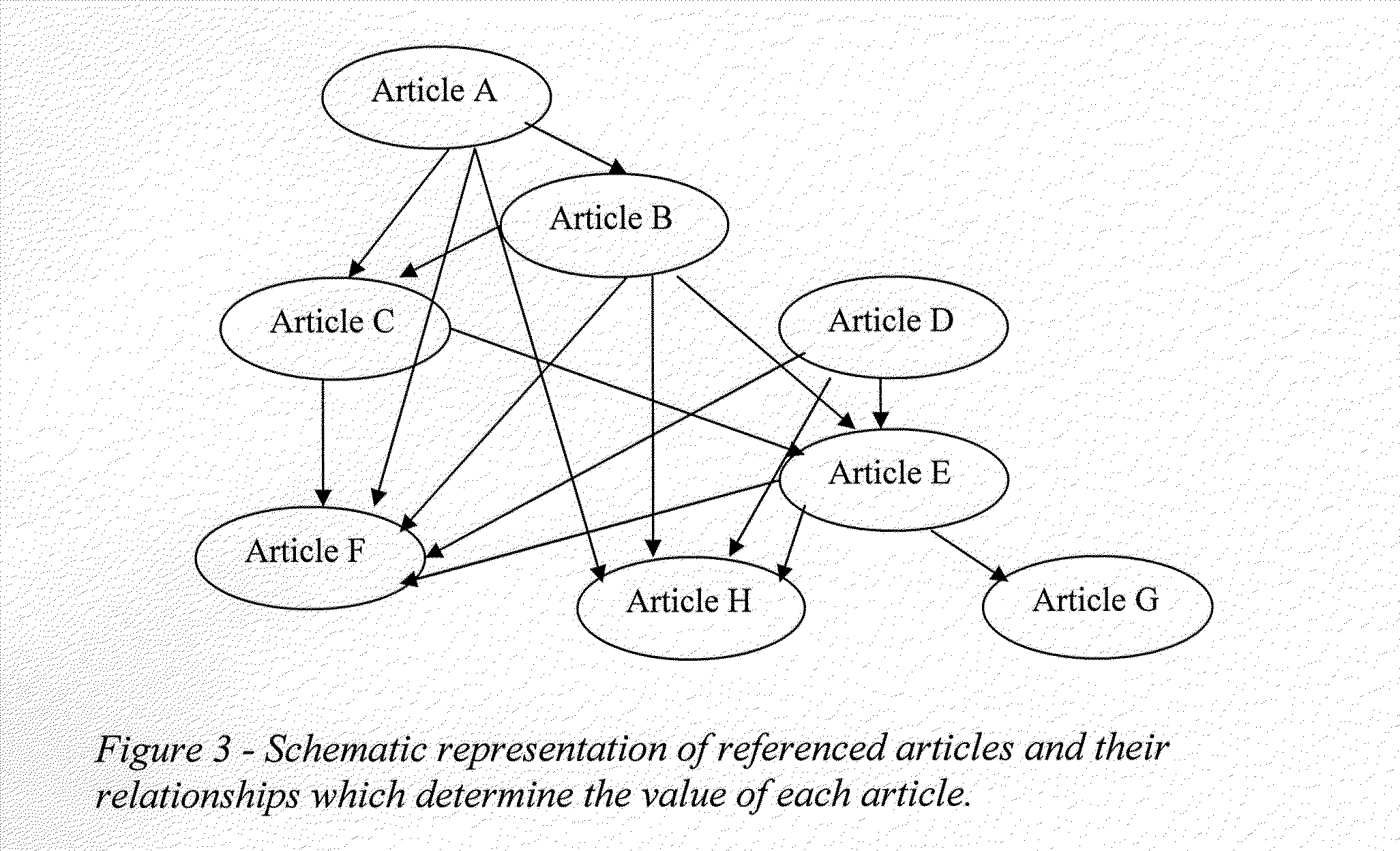
It relies on this simple fact that references to each article determine the value of the article. Every reference from article A to article B interpreted as a vote by article A for article B. The system also weighs article B’s value by analyzing how many votes it gets. Those with higher vote have more values and weight when vote for another article.
The combination of these two factors helps the Medantis system finds the best and the most relevant articles and ranks them in an intelligent order. That well-represented list of articles can be sorted in subsequent stages based on year of publications or author(s) name.
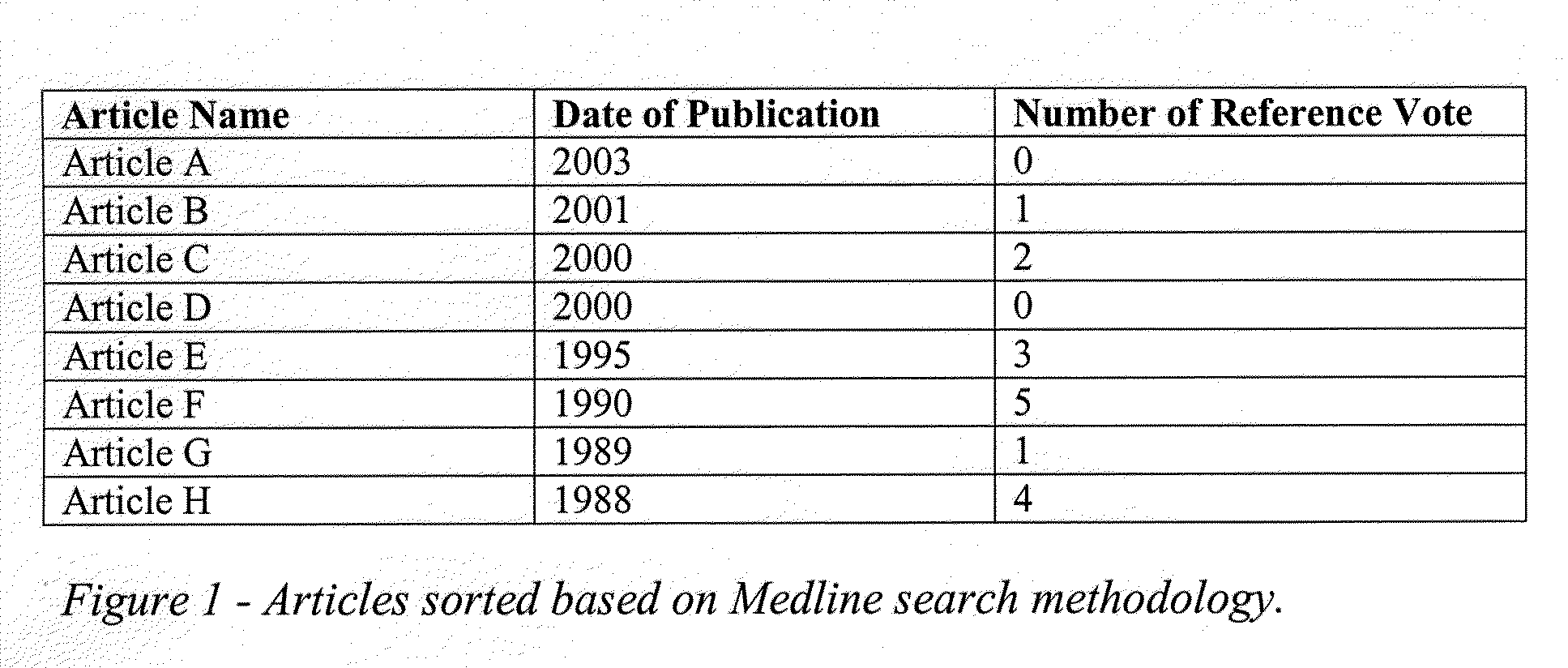
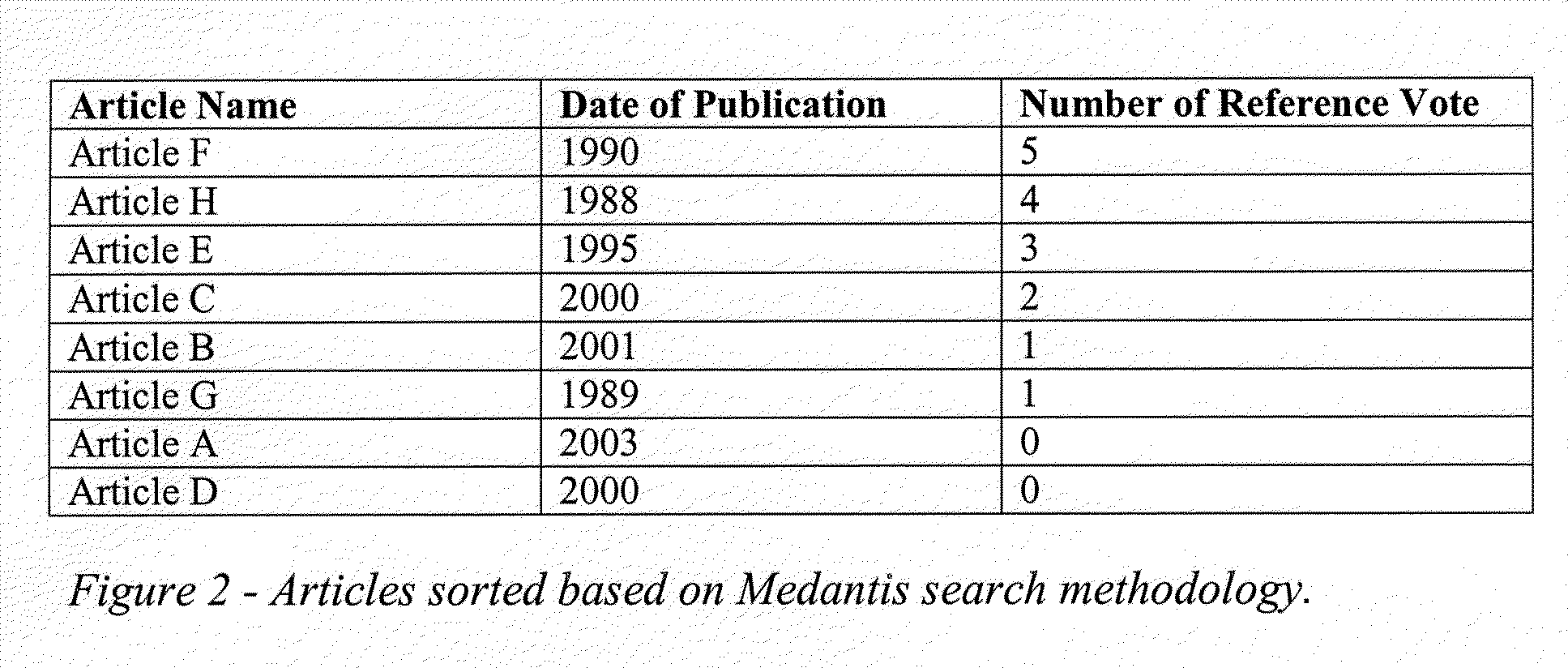
The following example will explain more in detail how this system works. For example if you search Medline for term “lacunar stroke” you get results in form of Article A, B, C, D, E, F, G, H sorted respectively based on the occurrence of the exact word(s)- in this example lacunar stroke- in the title or abstract and the date of publication (Figure 1). But the Medantis system will consider above factor and in addition, it will implement its technology and algorithm to evaluate number of reference vote that each article received and based on that sort the articles (Figure 2). In this way the result of search would be more relevant and pertinent to the search subject.
Figure 3 shows the referenced articles and their relationships which determine the value of each article.
Prospectives
From the description above, a number of advantages of Medantis search algorithm become evident. The researcher will see that the Medantis provides a highly relevant, reliable search results in any bibliographic databases. Medantis system can revolutionize and affect all heath care researchers and physicians and people who seek medical information and search bibliographic databases such as National Institute of Health Medline. It can also be applied in any bibliographic databases in any field and provide the best relevant information for researchers and potentially can accelerate the advancement of sciences in various fields and in medical area save lives of many peoples by enhancing biomedical researches and dissemination of medical information.
Contact Me
Send us a brief note at info@medantis.comWeb Site
Please bookmark this site for future.
www.medantis.com